
Chicken Thighs in the Air Fryer UK
Separate raw poultry from other foods, do not wash it and check the thickest edible part without touching bone. Bone-in and boneless thighs need distinct starting ranges.
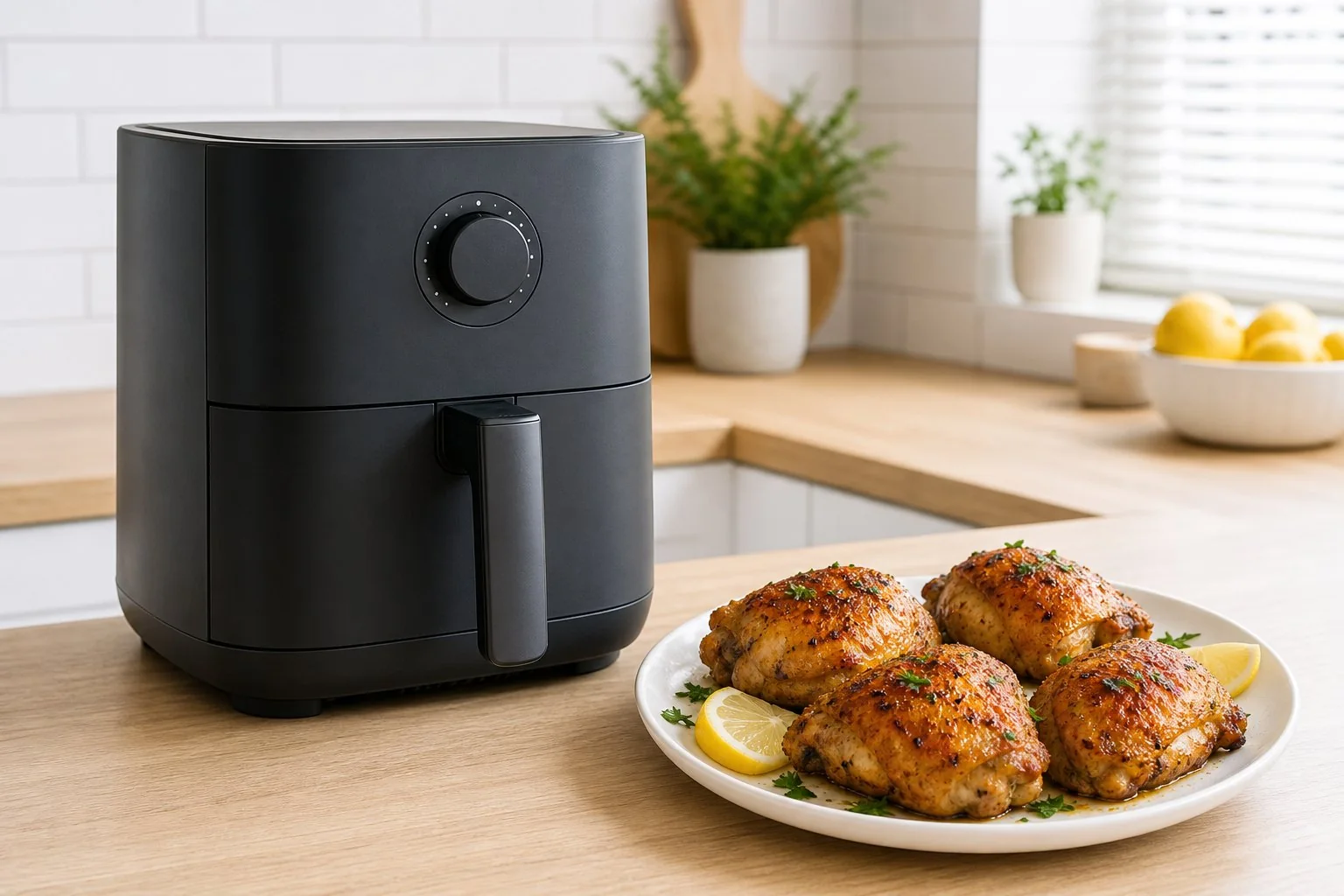
A checking window, followed by a direct centre check
At 180°C, boneless thighs often need about 15 to 18 minutes and bone-in thighs about 18 to 22 minutes. These are manufacturer-led starting windows; verify a safe centre temperature before serving.
Ingredients and equipment
This example batch is a practical reference, not a fixed serving or nutrition claim.
Example batch: 4 similar chicken thighs arranged in one layer.Ingredients
- 4 chicken thighs of the same cut and similar size
- 1 teaspoon oil if needed
- Optional herbs or seasoning
Equipment
- Air fryer
- Clean tongs
- Clean digital food thermometer
Research-based starting ranges
Start checking at the low end. These ranges do not prove completion.
| Type | Preparation | Temperature | Starting range | Check and adjust |
|---|---|---|---|---|
| Boneless thighs, about 90g | Four similar pieces | 180°C | 15-18 minutes | Turn halfway and measure the thickest part. |
| Bone-in thighs, 150-170g | Four similar pieces | 180°C | 18-22 minutes | Measure thick flesh without touching bone; extend if required. |
| Larger or tightly packed pieces | Do not mix cuts | 180°C | Start from guide, then check | Cook longer as needed and verify every unusually large piece. |
Preparation and cooking: step by step
Keep preparation clean, preserve airflow and use the direct endpoint stated for this food.
- 1
Do not wash chicken
Keep raw thighs covered and away from ready-to-eat food.
- 2
Prepare hygienically
Use clean dedicated utensils and wash hands after touching raw poultry.
- 3
Group similar pieces
Do not use one time for mixed bone-in and boneless cuts.
- 4
Cook and turn
Arrange one layer and turn halfway with clean tongs.
- 5
Measure the centre
Check the thickest edible flesh without touching bone; use an FSA safe time-temperature combination.
- 6
Rest and handle leftovers
Rest briefly, then serve; cool leftovers promptly and follow FSA reheating advice.
Troubleshooting the next batch
Change one variable at a time and never trade safety for speed.
Skin browns before centre is safe
Reduce the setting and continue while measuring away from bone.
Some thighs lag behind
Check pieces individually; size and bone position vary.
Skin is soft
Improve spacing and pat the surface dry before cooking next time.
Juices look clear but temperature is low
Continue cooking: visual signs do not override a measured unsafe endpoint.
Make the method fit this food
These notes address the variables that matter for this ingredient. They remain research-based starting guidance, not a record of hands-on testing.
Bone, skin and shape change the task
Boneless thigh pieces, bone-in thighs and rolled or stuffed products need separate cooking assumptions. Bone-in pieces are often irregular around the joint, and skin-on pieces need enough space for air to reach the surface. Use the range that matches the actual cut and packet state.
Place similarly sized thighs in one layer and avoid packing them tightly against the basket wall. When a batch contains noticeably different sizes, check each piece rather than treating the first reading as proof for the whole basket.
Check beside the bone, not through it
For bone-in thighs, position a clean thermometer in the thickest edible part close to, but not touching, the bone. A probe against bone or through a thin edge can give a misleading reading. Take a second reading when the shape makes the centre difficult to identify.
Skin colour and clear-looking juices are secondary observations, not substitutes for a recognised safe time-and-temperature combination. Handle raw poultry utensils separately, wash hands and clean the probe between raw contact and the final reading.
Reviewed sources and limitations
Manufacturer examples inform starting ranges; FSA guidance controls safety wording and completion checks.
Last reviewed: 18 July 2026. Review due: 18 January 2027.
Plan the rest of the meal
For a different ingredient and checking method, see Chicken Breast in the Air Fryer UK. Keep foods in separate batches when their safety checks or cooking windows differ.
Related guides
Frequently asked questions
No. It is a cautious starting window. Food size, starting temperature, basket load and appliance behaviour can change the result.
No. This is research-based guidance using official food-safety information and appliance-maker examples.
Follow the product packet and your appliance instructions where they are more specific, then perform the stated direct doneness check.
No. Appearance is secondary to the direct centre check, especially for meat and poultry.
Follow current FSA guidance: cool promptly, refrigerate within two hours, use within 48 hours or freeze, and reheat only once until steaming hot throughout.