
Chicken Breast in the Air Fryer UK
Keep raw chicken separate, do not wash it and use a clean thermometer in the thickest part. Breast weight and thickness matter more than a single advertised time.
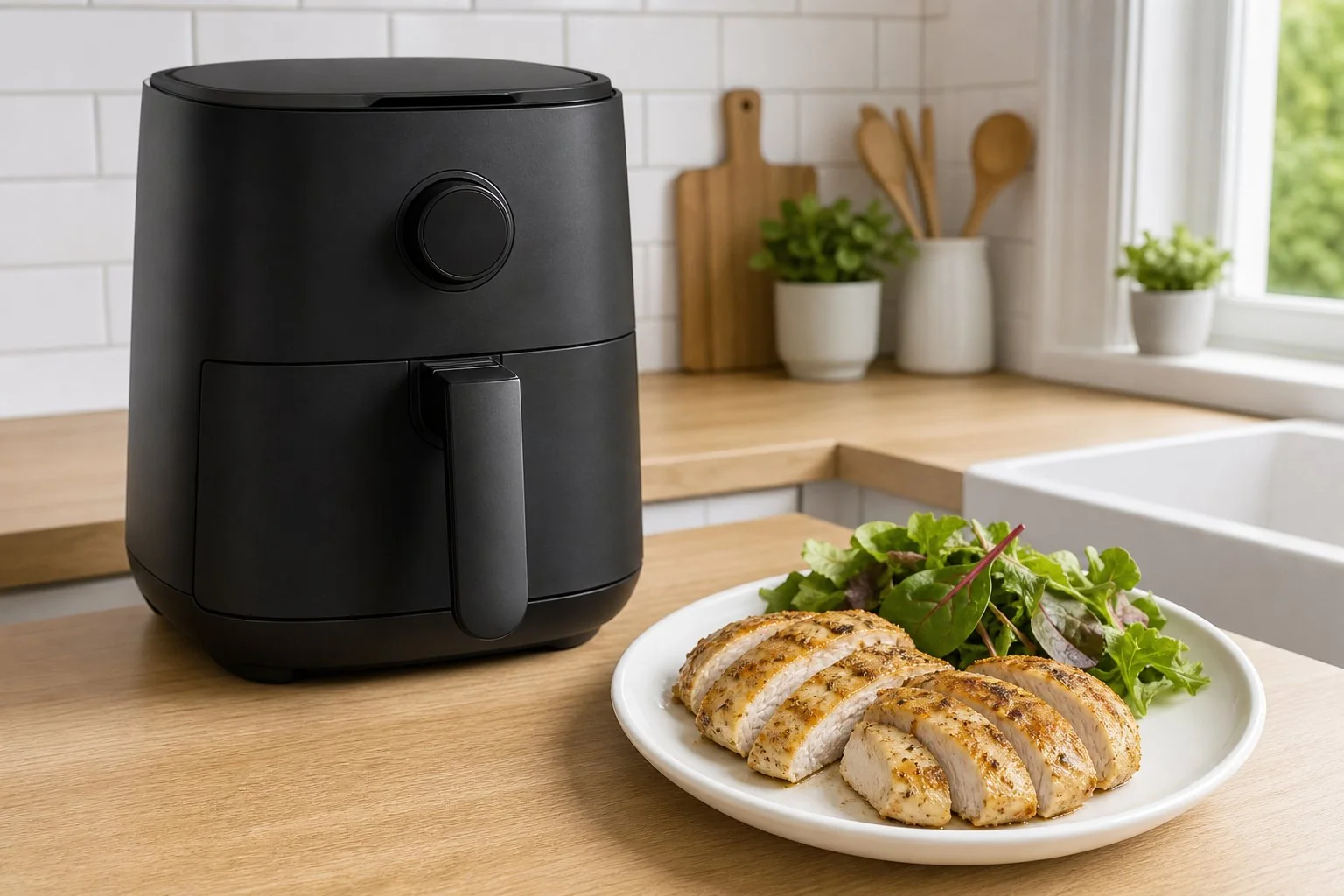
A checking window, followed by a direct centre check
For 180 to 200g skinless chicken breasts, 180°C for roughly 16 to 24 minutes is a cautious starting window. Turn if required and verify a safe time-temperature combination in the thickest part.
Ingredients and equipment
This example batch is a practical reference, not a fixed serving or nutrition claim.
Example batch: 2 similar skinless chicken breasts, about 180 to 200g each.Ingredients
- 2 skinless chicken breasts of similar size
- 1 teaspoon oil
- Optional salt-free herbs or seasoning
Equipment
- Air fryer
- Clean tongs
- Clean digital food thermometer
Research-based starting ranges
Start checking at the low end. These ranges do not prove completion.
| Type | Preparation | Temperature | Starting range | Check and adjust |
|---|---|---|---|---|
| Even 1.5-2 cm breast | Flatten to an even thickness | 180-190°C | 16-20 minutes | Check early with a clean thermometer in the thickest part. |
| Whole 180-200g breast | Similar-sized pieces in one layer | 180°C | 20-24 minutes | Turn halfway; verify the thickest part and extend if required. |
| Smaller or larger piece | Do not infer from appearance | Appliance guide first | Check individually | Weight and thickness alter time; use a safe measured endpoint. |
Preparation and cooking: step by step
Keep preparation clean, preserve airflow and use the direct endpoint stated for this food.
- 1
Do not wash chicken
Keep it covered and separate from ready-to-eat food.
- 2
Prepare cleanly
Use a separate clean board and wash hands with warm soapy water after contact.
- 3
Make thickness even
Flatten only inside parchment or prepare pieces of similar thickness.
- 4
Cook in one layer
Use the cautious range and turn if the appliance guide calls for it.
- 5
Measure safely
Use a clean thermometer in the thickest part. One FSA option is 75°C for 30 seconds; equivalent combinations are listed below.
- 6
Clean and store
Clean contacted surfaces; cool leftovers promptly and reheat only once until steaming hot throughout.
Troubleshooting the next batch
Change one variable at a time and never trade safety for speed.
Outside browns before centre is safe
Lower the setting and continue while measuring the centre.
Different sizes finish apart
Check and remove each piece only after it reaches a safe endpoint.
Chicken seems dry
Use more even thickness and begin measuring earlier next time.
No thermometer available
Follow official guidance: the centre must be steaming hot, with no pink meat and clear juices; a thermometer is more reliable.
Make the method fit this food
These notes address the variables that matter for this ingredient. They remain research-based starting guidance, not a record of hands-on testing.
Thickness controls the checking window
Chicken breast weight is only a rough proxy for cooking time. A thick centre takes longer to heat than a flatter piece of the same weight, while two overlapping pieces restrict airflow. Arrange portions in one layer and begin checking the thickest piece at the lower end of the stated range.
If portions differ markedly, do not assume they will finish together. Remove a piece only after its own centre reaches a safe combination, then continue cooking and checking the thicker pieces in short increments.
Moisture, browning and the direct check
Surface moisture and heavy marinades can slow browning or cause drips, but colour is not the safety test. Follow packet instructions for pre-marinated products and avoid adding a sugary coating so early that it darkens before the centre is ready.
Insert a clean thermometer into the thickest part without touching the basket. Check more than one piece in a mixed batch. Resting may help juices settle, but it must not be used to rescue chicken that has not reached a recognised safe centre combination.
Reviewed sources and limitations
Manufacturer examples inform starting ranges; FSA guidance controls safety wording and completion checks.
Last reviewed: 18 July 2026. Review due: 18 January 2027.
Plan the rest of the meal
For a different ingredient and checking method, see Chicken Thighs in the Air Fryer UK. Keep foods in separate batches when their safety checks or cooking windows differ.
Related guides
Frequently asked questions
No. It is a cautious starting window. Food size, starting temperature, basket load and appliance behaviour can change the result.
No. This is research-based guidance using official food-safety information and appliance-maker examples.
Follow the product packet and your appliance instructions where they are more specific, then perform the stated direct doneness check.
No. Appearance is secondary to the direct centre check, especially for meat and poultry.
Follow current FSA guidance: cool promptly, refrigerate within two hours, use within 48 hours or freeze, and reheat only once until steaming hot throughout.