
Roast Potatoes in the Air Fryer UK
Cut potatoes to a similar size, dry them well and turn or toss during cooking. Parboiling is optional, while piece size and basket load decide how soon to check.
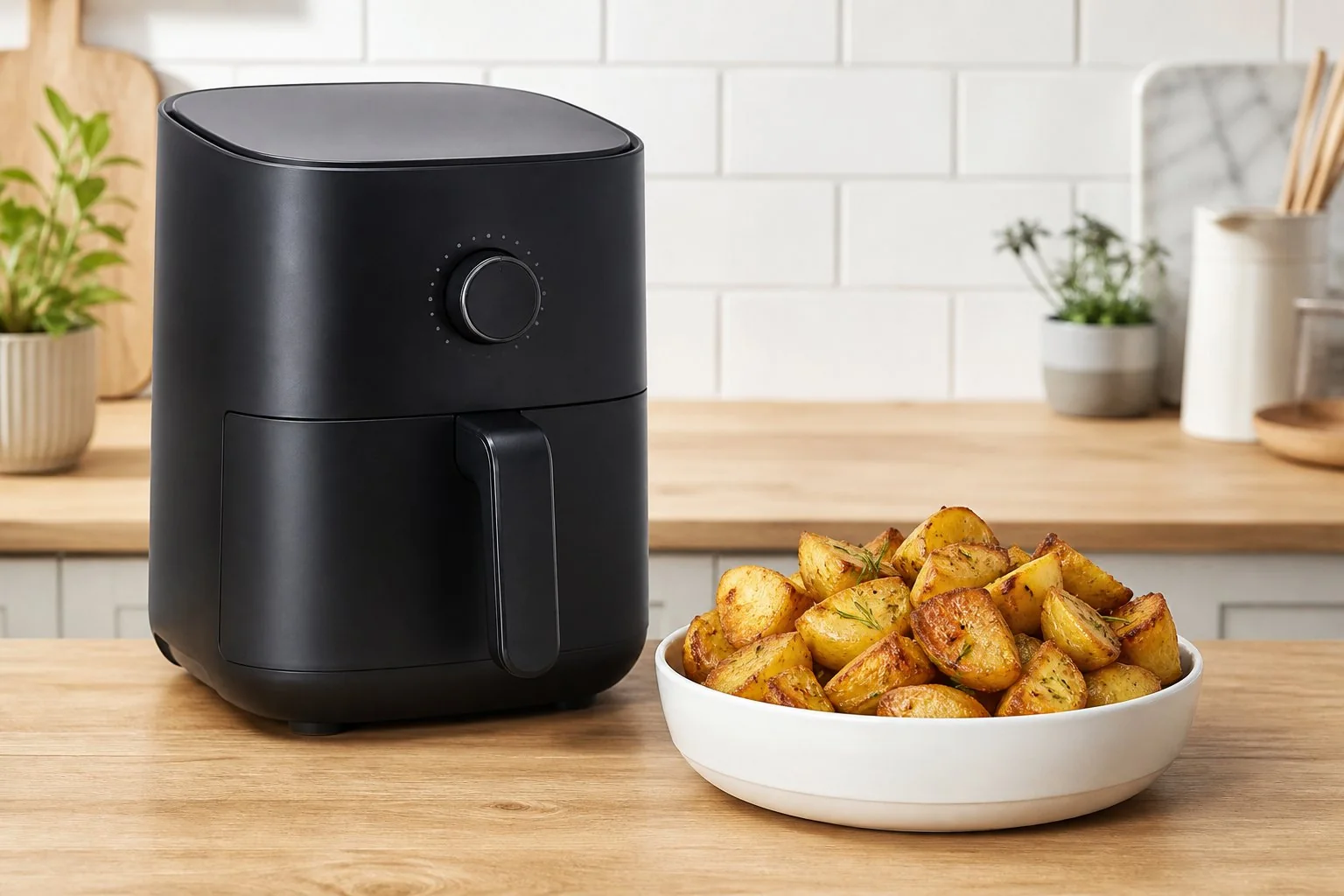
A checking window, followed by a direct centre check
For 3 to 4 cm potato pieces, start around 190°C for 20 to 30 minutes, turning several times. Parboiled pieces may crisp sooner; check the centre and avoid very dark browning.
Ingredients and equipment
This example batch is a practical reference, not a fixed serving or nutrition claim.
Example batch: 500g potatoes cut into similar 3 to 4 cm pieces.Ingredients
- 500g potatoes
- 1 tablespoon oil
- Optional herbs or seasoning
Equipment
- Air fryer
- Clean tongs
- Knife or skewer for centre checks
Research-based starting ranges
Start checking at the low end. These ranges do not prove completion.
| Type | Preparation | Temperature | Starting range | Check and adjust |
|---|---|---|---|---|
| Raw potato chunks | 3-4 cm pieces, rinsed and dried | 190°C | 24-30 minutes | Turn two or three times; check that the centre is tender. |
| Parboiled chunks | 3-4 cm pieces, drained and steam-dried | 190°C | 18-24 minutes | Turn carefully; stop at golden rather than very dark brown. |
| Baby potatoes | Halved or quartered if large | 190°C | 22-30 minutes | Check the largest piece and extend in short increments. |
Preparation and cooking: step by step
Keep preparation clean, preserve airflow and use the direct endpoint stated for this food.
- 1
Prepare evenly
Cut similar pieces, rinse away surface starch if desired and dry thoroughly.
- 2
Parboil only if wanted
A short parboil can soften the centre; drain and steam-dry before oiling.
- 3
Coat lightly
Mix with a modest amount of oil and seasoning.
- 4
Air-fry with space
Cook in a loose layer and turn several times.
- 5
Check directly
A knife should enter the largest piece easily; avoid excessive dark browning.
Troubleshooting the next batch
Change one variable at a time and never trade safety for speed.
Pale surfaces
Dry more thoroughly and reduce basket crowding.
Dark outside, firm centre
Use smaller, even pieces or a lower setting with more time.
Pieces break up
Parboil less and turn more gently.
Soft rather than crisp
Cook a smaller batch with better airflow.
Make the method fit this food
These notes address the variables that matter for this ingredient. They remain research-based starting guidance, not a record of hands-on testing.
Cut size and surface preparation
Evenly sized pieces make the checking window more useful. Large chunks need longer for the centre to soften, while small edges can colour quickly. After washing or parboiling, let excess surface water drain so that the basket is not filled with steam at the start.
Roughened edges may create more exposed surface, but the result also depends on potato variety, oil, load and appliance airflow. Treat any preparation step as a variable to repeat consistently rather than a guarantee of crispness.
Load, turning and doneness
Spread pieces with gaps where practical and avoid a deep pile. Turn or shake carefully at the suggested checkpoint, then separate pieces that have stuck together. If smaller pieces are ready first, remove them and continue checking larger centres.
A browned exterior does not prove the middle has softened. Test the largest pieces with a knife or skewer and extend the time in short increments. Keep hot oil and the basket stable when shaking, and follow the appliance manual for maximum loads and suitable fats.
Reviewed sources and limitations
Manufacturer examples inform starting ranges; FSA guidance controls safety wording and completion checks.
Last reviewed: 18 July 2026. Review due: 18 January 2027.
Plan the rest of the meal
For a different ingredient and checking method, see Jacket Potato in the Air Fryer UK. Keep foods in separate batches when their safety checks or cooking windows differ.
Related guides
Frequently asked questions
No. It is a cautious starting window. Food size, starting temperature, basket load and appliance behaviour can change the result.
No. This is research-based guidance using official food-safety information and appliance-maker examples.
Follow the product packet and your appliance instructions where they are more specific, then perform the stated direct doneness check.
No. Appearance is secondary to the direct centre check, especially for meat and poultry.
Follow current FSA guidance: cool promptly, refrigerate within two hours, use within 48 hours or freeze, and reheat only once until steaming hot throughout.