
Bacon in the Air Fryer UK
Air-fry bacon in an uncrowded layer, inspect it early and manage rendered fat according to the appliance instructions. Rasher thickness and preferred texture materially change the time.
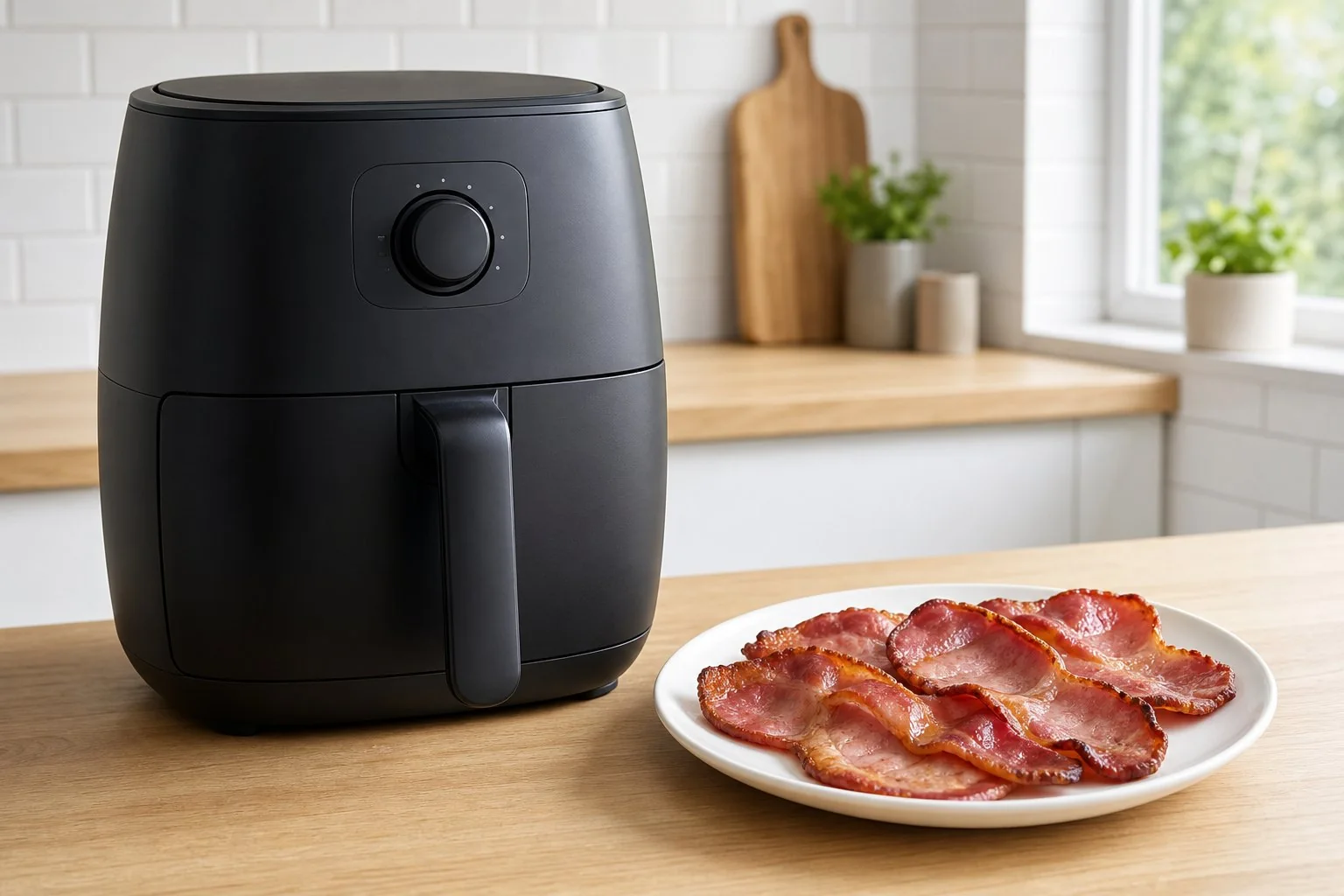
A checking window, followed by a direct centre check
For chilled back bacon, start around 180°C and inspect from 6 minutes; many batches need roughly 6 to 10 minutes. Treat this as a checking window, not a promise, and follow the pack first.
Ingredients and equipment
This example batch is a practical reference, not a fixed serving or nutrition claim.
Example batch: 2 to 4 chilled back-bacon rashers in one layer.Ingredients
- 2 to 4 chilled bacon rashers
- No added oil is normally needed
Equipment
- Air fryer
- Clean tongs
- Clean digital food thermometer
Research-based starting ranges
Start checking at the low end. These ranges do not prove completion.
| Type | Preparation | Temperature | Starting range | Check and adjust |
|---|---|---|---|---|
| Thin back bacon | Single uncrowded layer | 180°C | 6-8 minutes | Inspect early and turn if your appliance guide recommends it. |
| Thicker back bacon | Single layer; edges may overlap only slightly | 180°C | 8-10 minutes | Check texture and cooking through; add short increments if needed. |
| Streaky bacon | Single layer with room for rendered fat | 180°C | 6-9 minutes | Monitor closely because fat and edges can darken quickly. |
Preparation and cooking: step by step
Keep preparation clean, preserve airflow and use the direct endpoint stated for this food.
- 1
Check the pack
Use product-specific storage and cooking directions where provided.
- 2
Arrange the rashers
Use a single layer and keep bacon clear of the heating element.
- 3
Cook and inspect early
Begin checking at the low end because thin edges can darken quickly.
- 4
Remove carefully
Use tongs and beware of hot rendered fat.
- 5
Clean when cool
Follow the appliance instructions for removing fat and cleaning the drawer.
Troubleshooting the next batch
Change one variable at a time and never trade safety for speed.
Edges darken too quickly
Reduce the setting and inspect more often; do not cover the basket with loose material.
Bacon is pale
Avoid crowding and add a short increment.
Smoke appears
Stop safely and check the appliance instructions for pooled fat or residue.
Rashers move in strong airflow
Use the appliance maker's approved rack only; never improvise a weight.
Make the method fit this food
These notes address the variables that matter for this ingredient. They remain research-based starting guidance, not a record of hands-on testing.
Match the range to the rasher
Thin streaky rashers, thicker back bacon and medallions expose different amounts of fat and lean meat. Use the packet and the closest stated range, then check early because a thin edge can change quickly near the end. Separate folded or stuck rashers before cooking.
Lay rashers so air can circulate without forcing them against the heating area. If the basket is small, cook a second batch rather than building several overlapping layers. Record the cut and thickness if you want to repeat the result.
Manage rendered fat and smoke
Bacon can release substantial fat. Start with a clean drawer and follow the manual's instructions for fatty foods, liners and maximum loads. Stop if the appliance smokes persistently, allow it to cool safely and clean accumulated residue before using it again.
Do not pour water or add an improvised absorbent material unless the manufacturer explicitly instructs it. Remove the basket carefully because hot fat may move beneath it. For leftovers, cool and refrigerate promptly under current FSA guidance rather than leaving cooked bacon at room temperature.
Reviewed sources and limitations
Manufacturer examples inform starting ranges; FSA guidance controls safety wording and completion checks.
Last reviewed: 18 July 2026. Review due: 18 January 2027.
Plan the rest of the meal
For a different ingredient and checking method, see Sausages in the Air Fryer UK. Keep foods in separate batches when their safety checks or cooking windows differ.
Related guides
Frequently asked questions
No. It is a cautious starting window. Food size, starting temperature, basket load and appliance behaviour can change the result.
No. This is research-based guidance using official food-safety information and appliance-maker examples.
Follow the product packet and your appliance instructions where they are more specific, then perform the stated direct doneness check.
No. Appearance is secondary to the direct centre check, especially for meat and poultry.
Follow current FSA guidance: cool promptly, refrigerate within two hours, use within 48 hours or freeze, and reheat only once until steaming hot throughout.